

Safety Instructions
Proper warm-up: Before any workout, perform joint mobility and muscle activation exercises to prepare your neck.
Gradual progression: Don’t increase the load or intensity too quickly; it’s better to gradually increase the stimulus.
Correct posture: Maintain proper neck alignment in each exercise to avoid overloading, with a straight spine, relaxed shoulders, and contracted abdomen.
Good technique: Perform controlled movements, avoiding momentum and sudden impacts. Natural range of motion.
Rest and recovery: The neck, like any other muscle, needs time to recover after intense workouts.
For rehabilitation or treatment of previous injuries, consult a medical professional.
Progression
Beginner (Weeks 1-3):
Focus: Technique, mobility, activation
Resistance: Very light (resistance bands or minimal weight)
Goal: Develop neuromuscular control
2-3 sets of 12-15 repetitions. Start with a light weight or a low-resistance band. This is essential for learning proper technique and protecting the cervical spine. Controlled neck flexions and extensions or rotations without weight.
Intermediate (Weeks 4-8):
Focus: Strength Development
Resistance: Moderate Load
Incorporate multidirectional exercises (front, back, side)
3-4 sets of 10-12 repetitions (moderate resistance)
Advanced (Weeks 9+):
Focus: Maximum strength and endurance
Endurance: Heavier loads with strict control
Incorporate isometric contractions and longer time under tension or eccentric work with controlled weights
4-5 sets of 8-10 repetitions (higher resistance)
Rest: 45-90 seconds between sets
Progression: As you become more comfortable with the exercises, start increasing the load or the number of repetitions to continue challenging your muscles.
Exercises
Perform with natural ranges of motion, without reaching the limit.
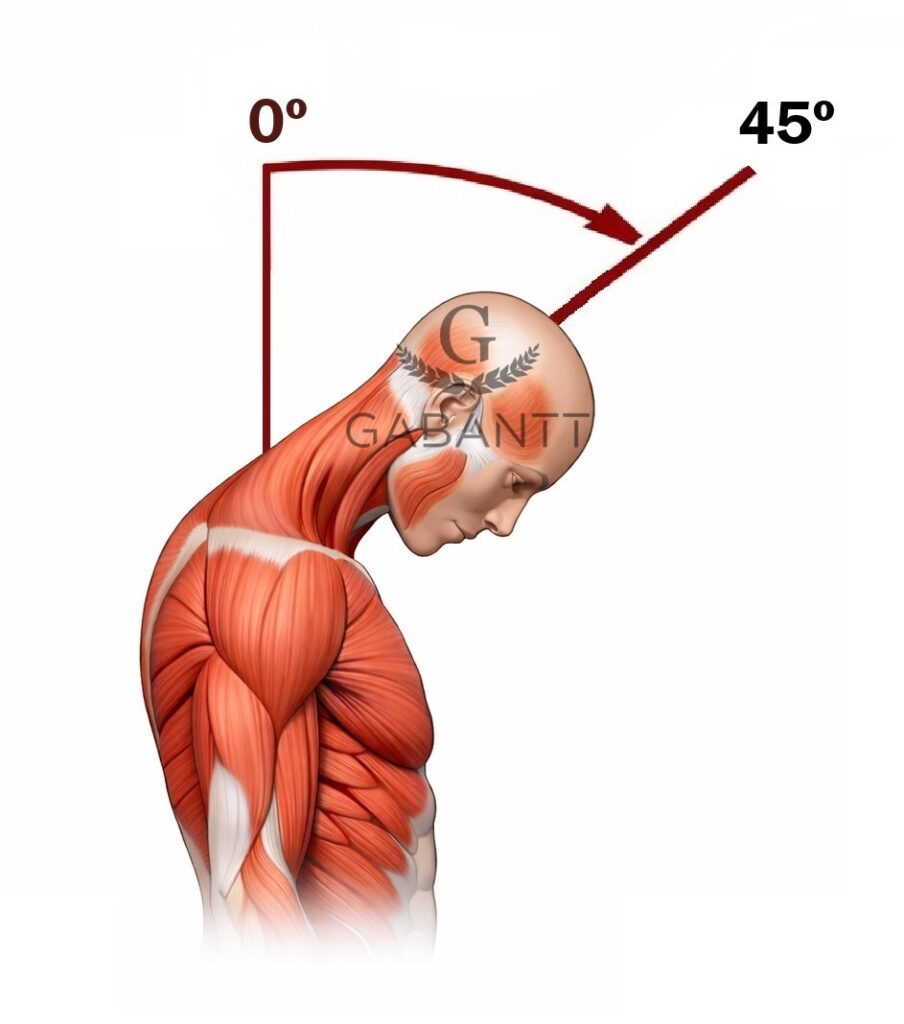
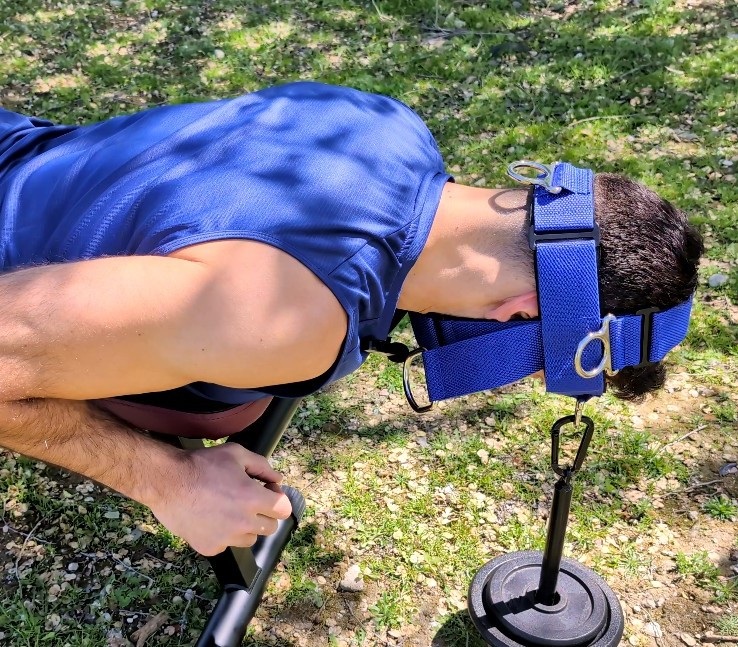
Neck flexion
Works the anterior neck muscles.
Forward bend: bring your chin toward your chest. The normal range is approximately 35° to 45°.
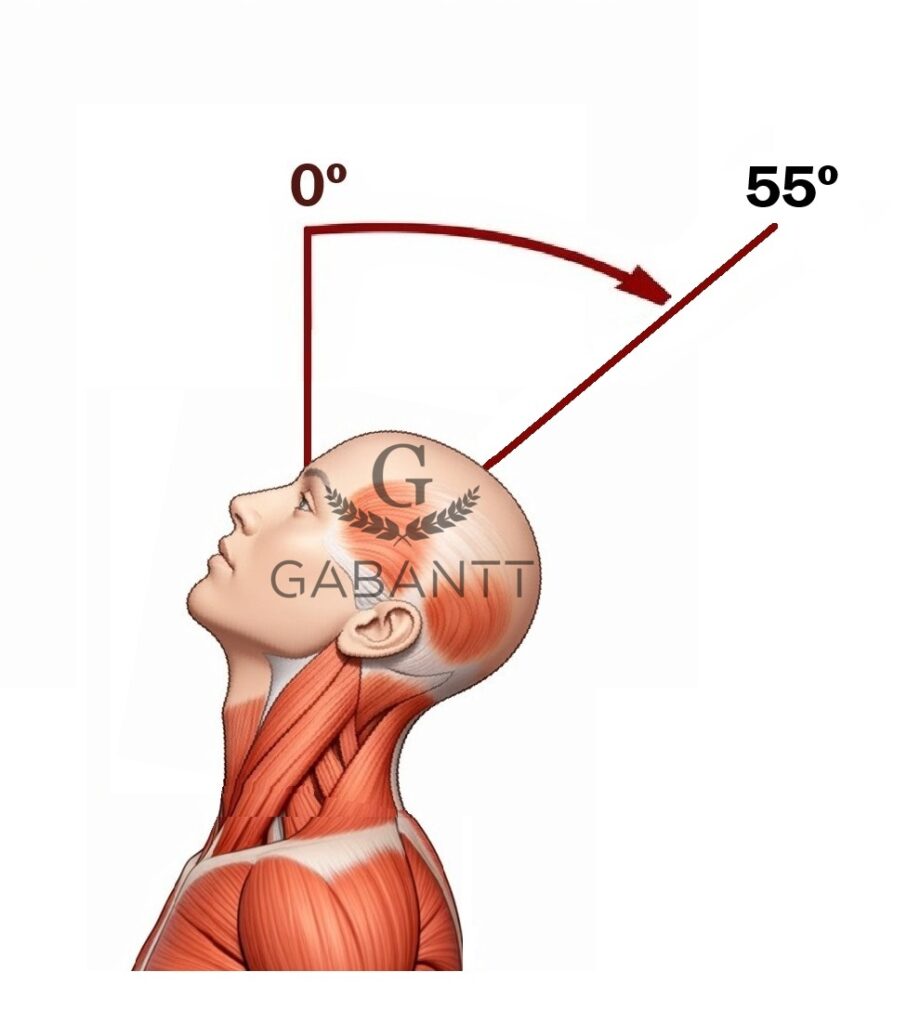
Neck extension
Strengthens the posterior chain, essential for combat sports and impact resistance.
Backward bend: look toward the ceiling. The normal range is approximately 35° to 55°.
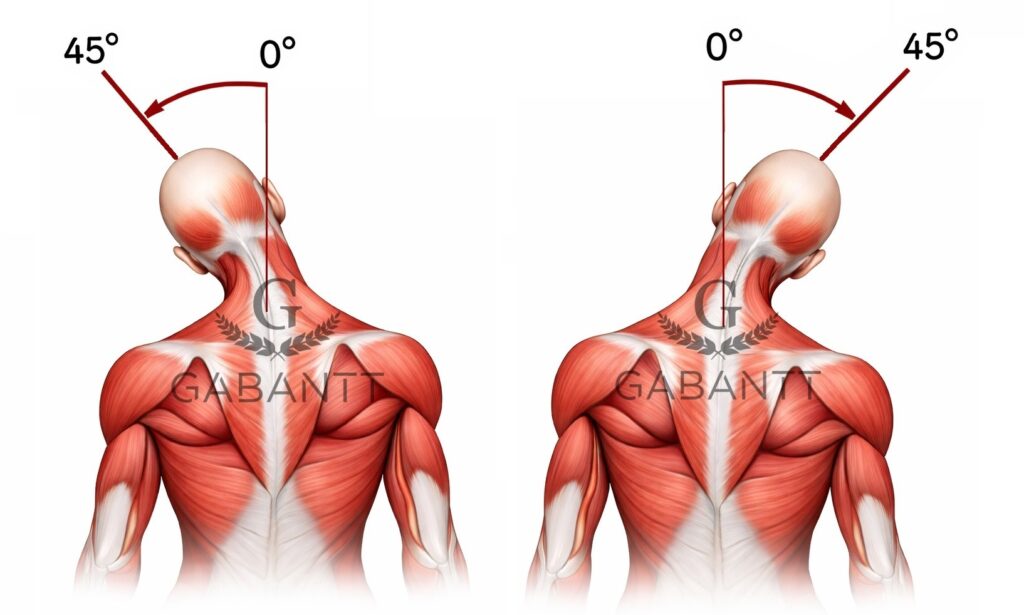
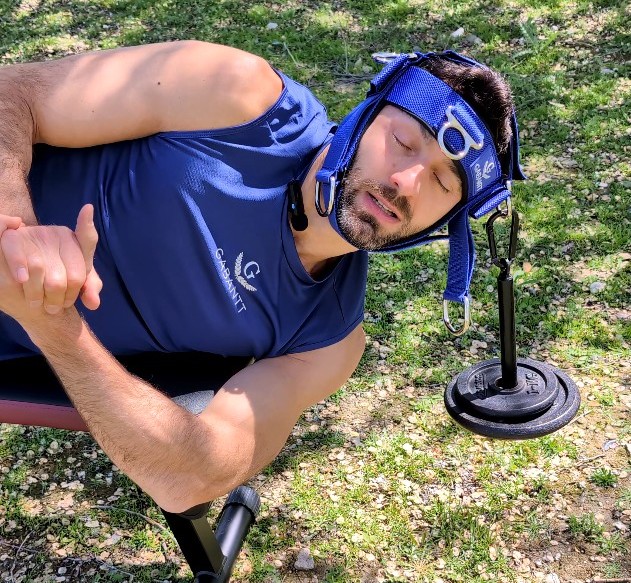
Lateral flexion
Improves stability and reduces potential imbalance between both sides.
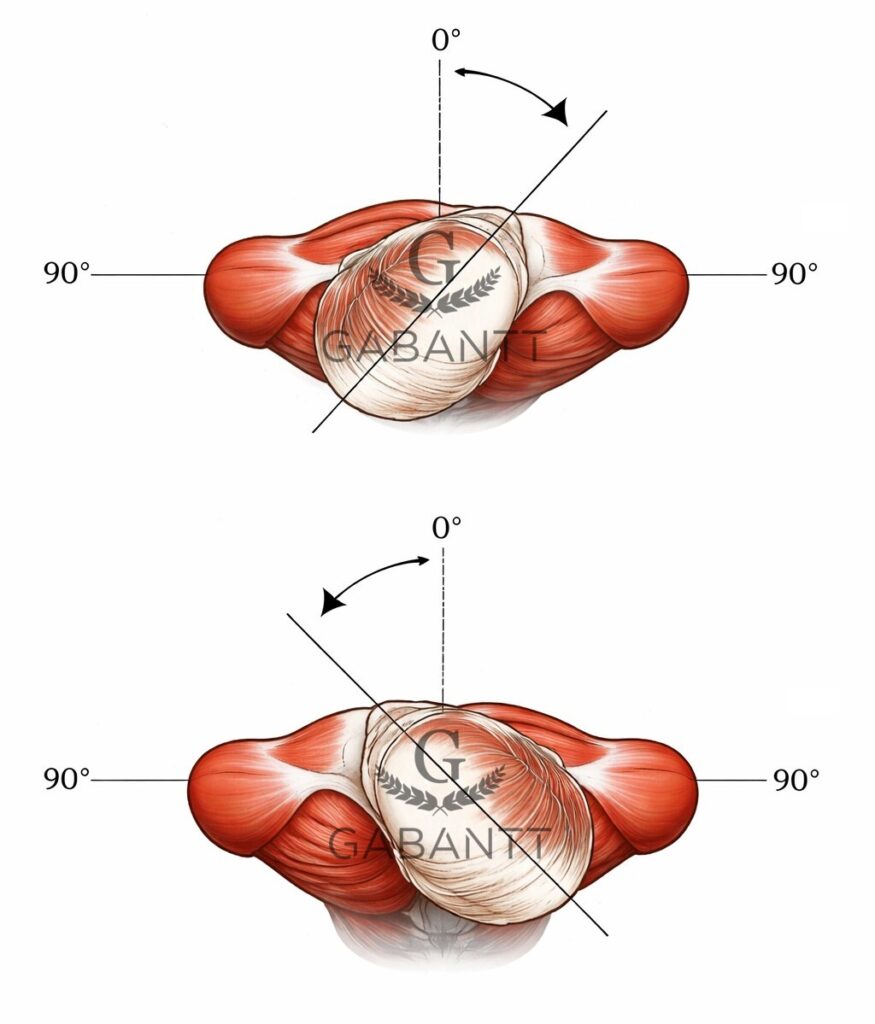
Lateral tilt (ear to shoulder): move your head laterally without rotating it. The normal range is 45° to each side.
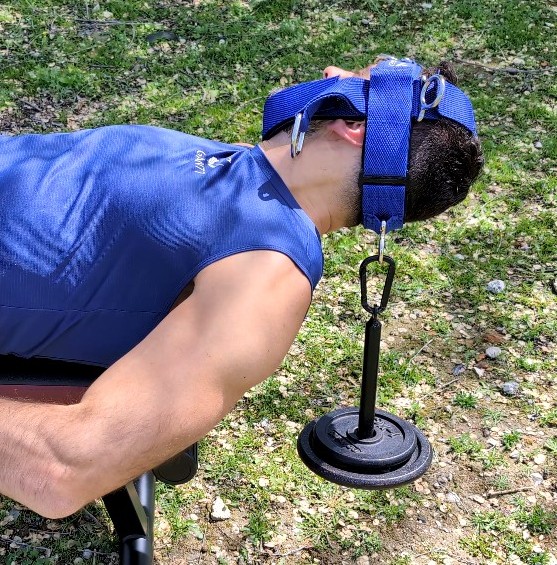
Rotations
Side to side: Turn your chin toward your shoulder. The normal range is between 60° and 80° to each side.
Isometric exercises
Hold a fixed position under tension for 15-30 seconds to develop strength and joint stability.
Rehabilitation movements
Use resistance bands for low-load, high-control exercises, ideal for rehabilitation and reducing neck pain.
Harness Setup
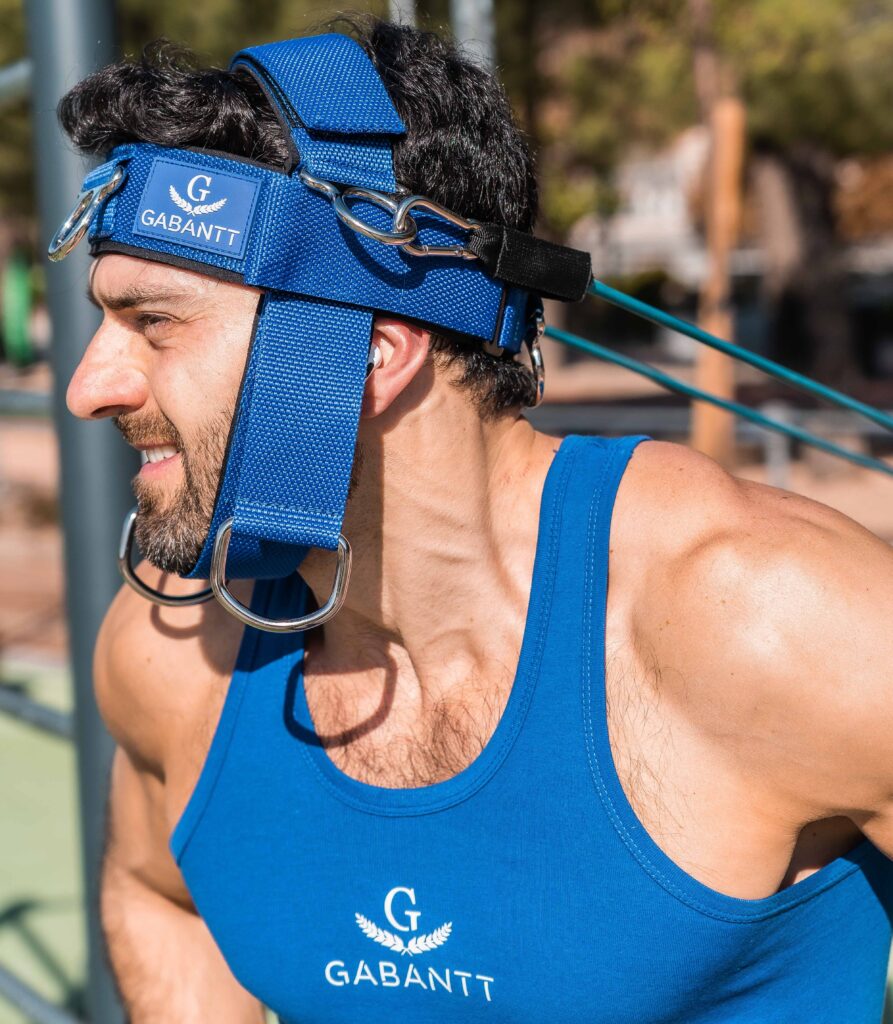
Place the harness over your head (with the logo facing forward).
Adjust the length of the straps (top, back, and chin) using the Velcro closures to fit your size.
Top Strap
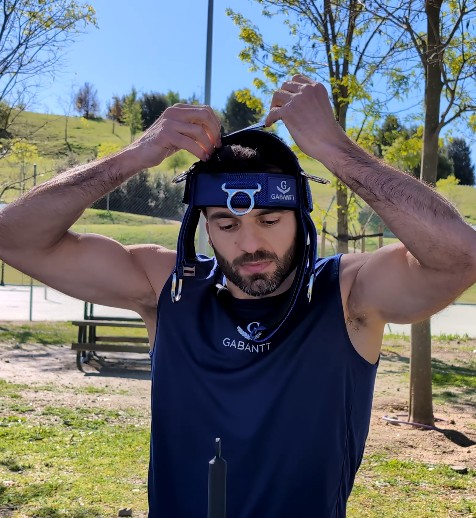
Perimeter – back straps
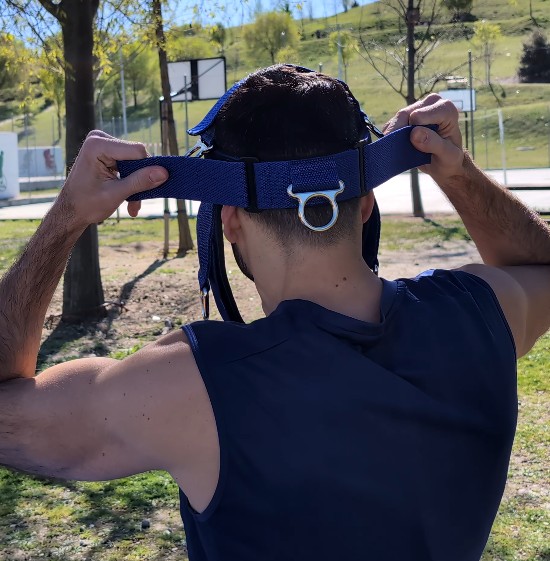
Chin Strap

Carabiners x3
Attach one carabiner to each end of the chain. The third carabiner connects to the load-bearing pin.
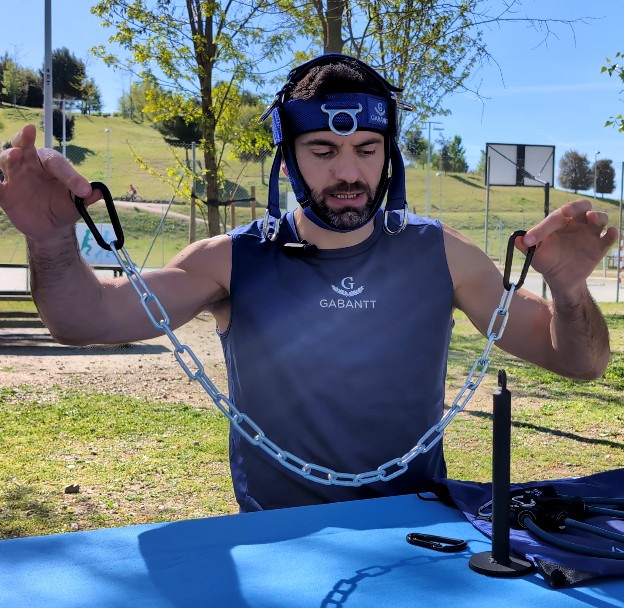
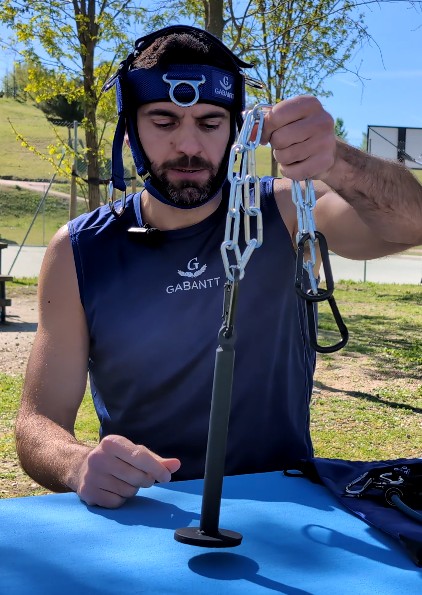
Assume the correct position based on the specific exercise and the resistance accessory being used.
Adjust the resistance according to your fitness level (add weight plates or resistance bands).
Use of Accesories
Chain: You can thread it through the holes in the weight plates to add weight. Traditional method.
It can also be useful for isometric exercises by attaching the chain to a fixed point.
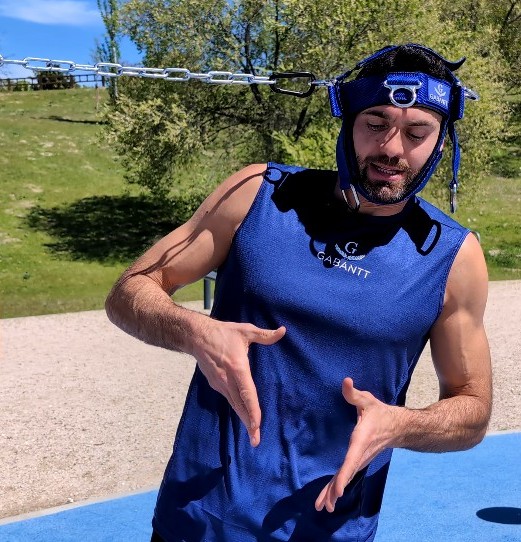
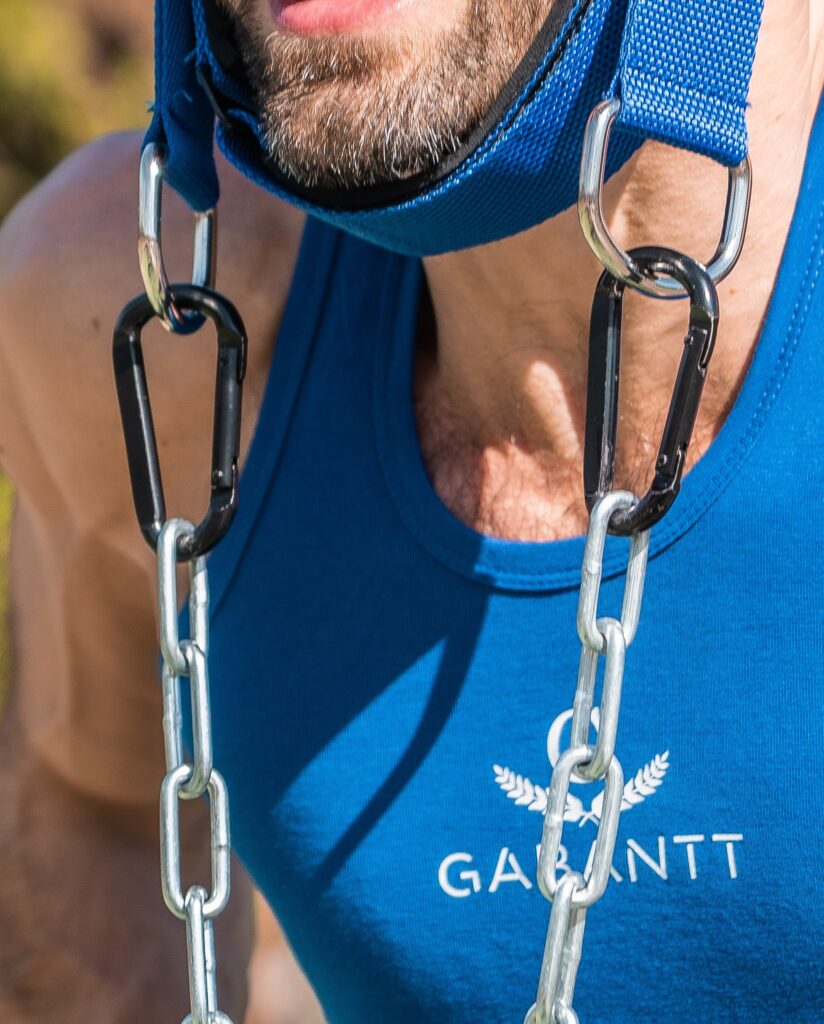
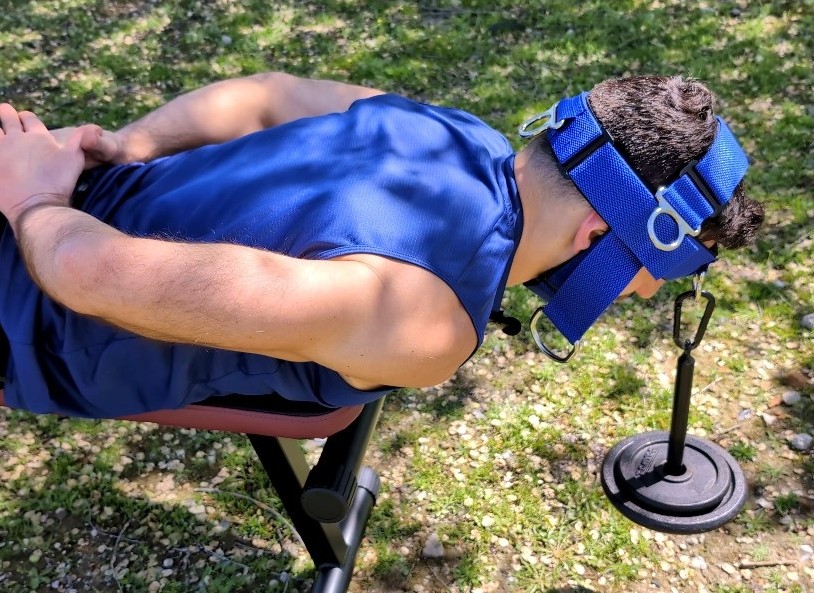
Chain + Chargin pin: Highly recommended for working on neck extension. Place the weight plates directly onto the weight pin and attach it to the chain.
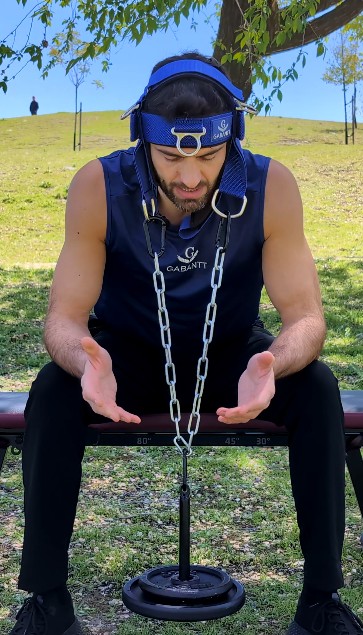
Charging pin: For certain exercises, you can connect it directly to get the most out of the harness rings, without chain.
Flexion
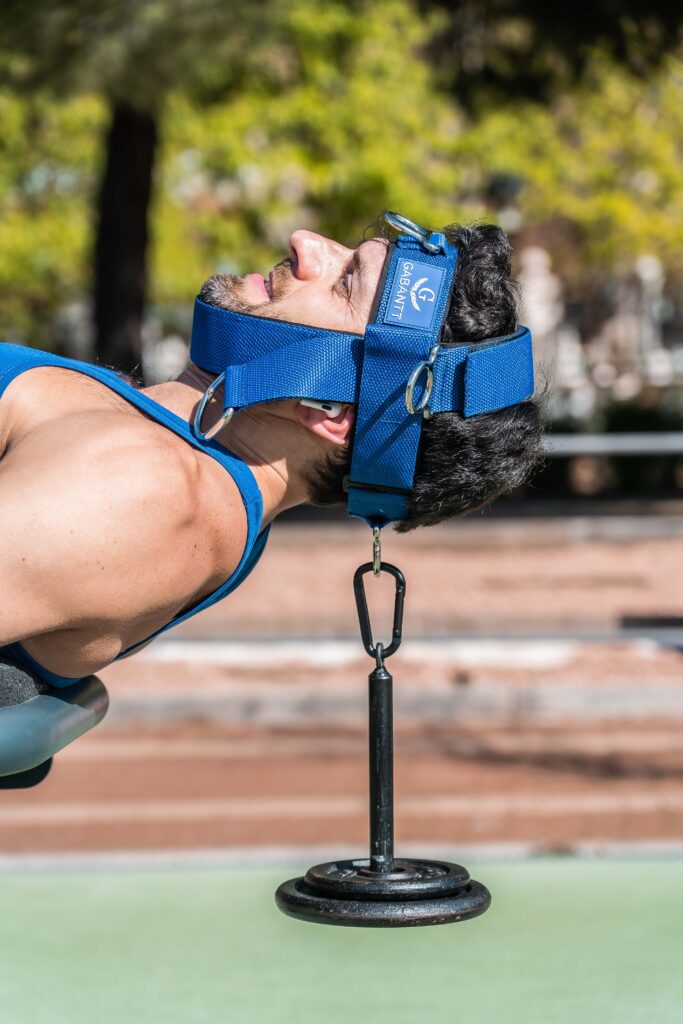
Extension
Lateral Flexion
Rotations
Isometrics
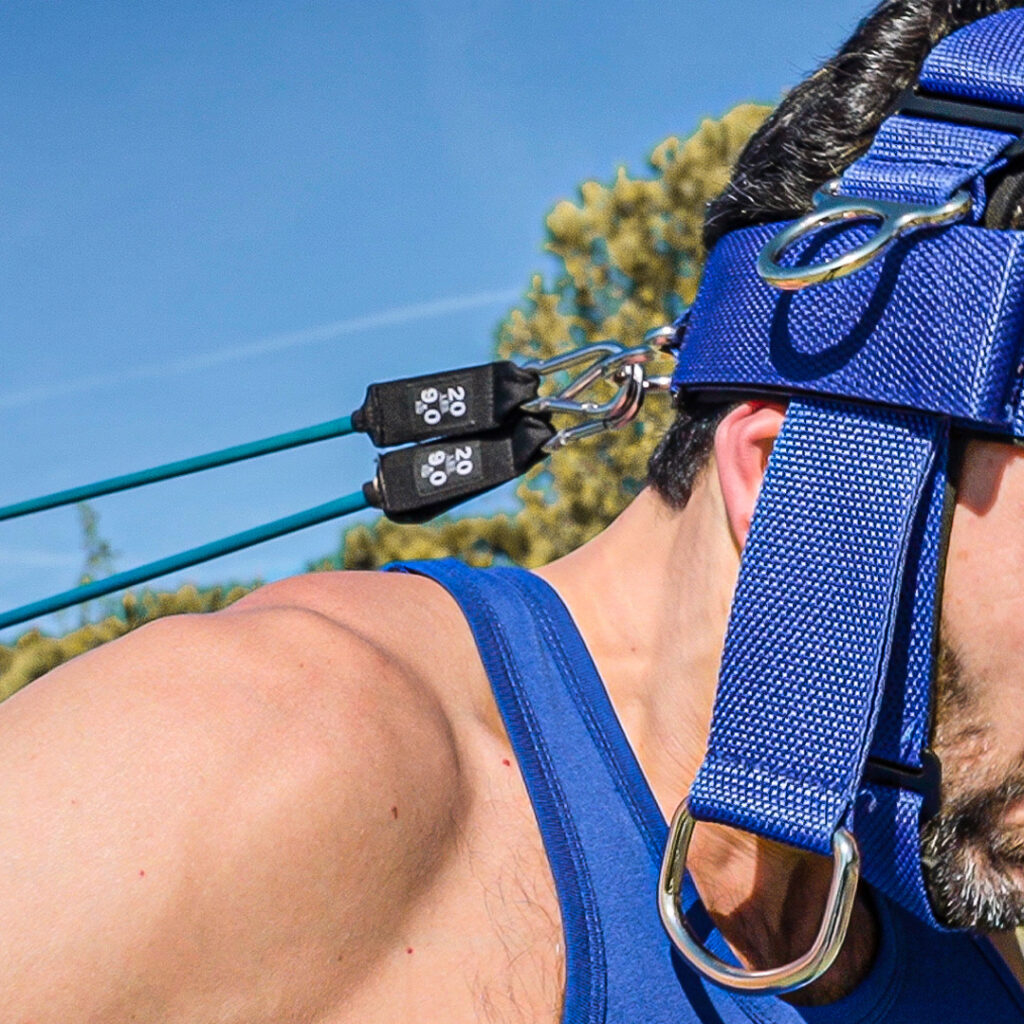
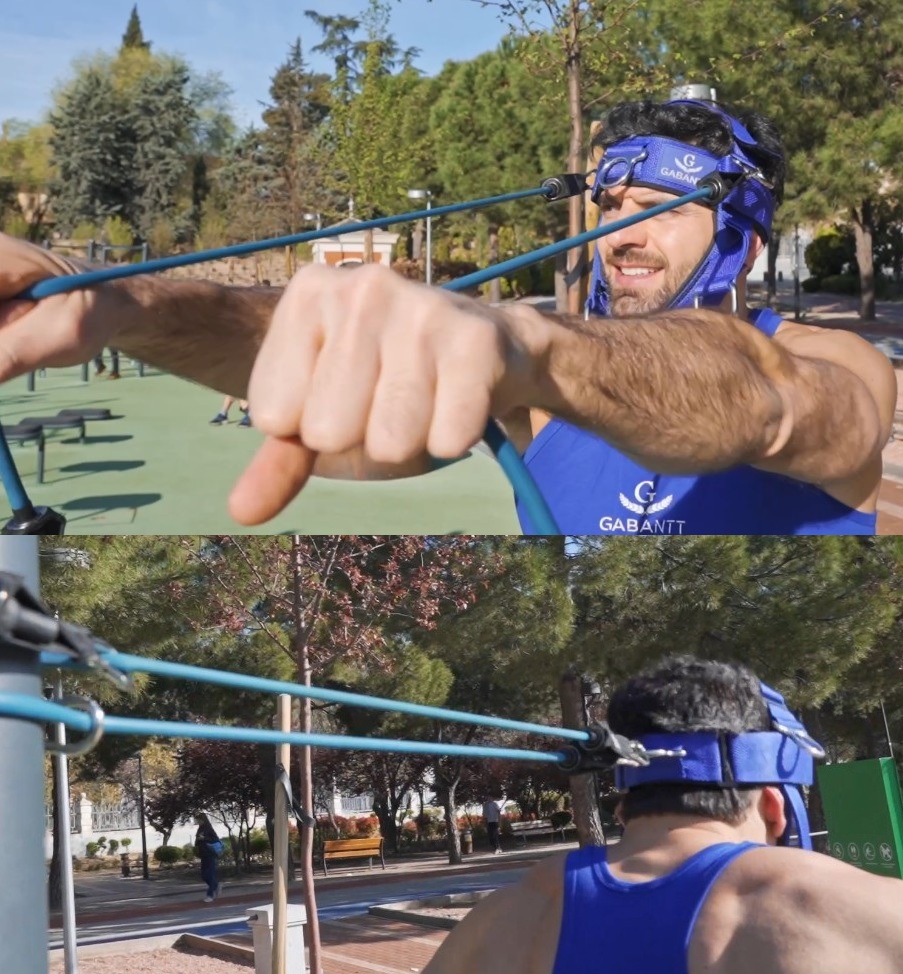
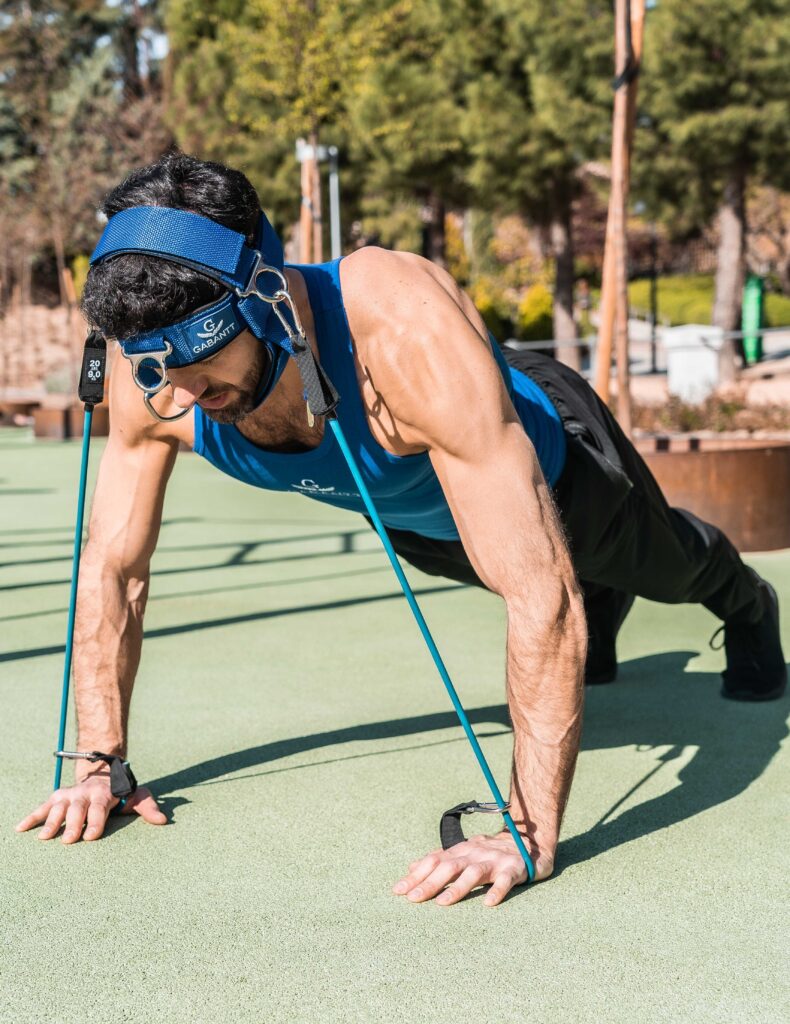
Resistance bands: Connect one end to the rings of the harness and the other end to a fixed point, or you can also hold them with your hands.
Training Tips
Prioritize control over weight: focus on precision.
Train your neck muscles 2 or 3 times a week, not daily.
Combine this training with upper back and posture exercises for optimal results.
Consistency and gradual progression are key to developing a strong and resilient neck.