
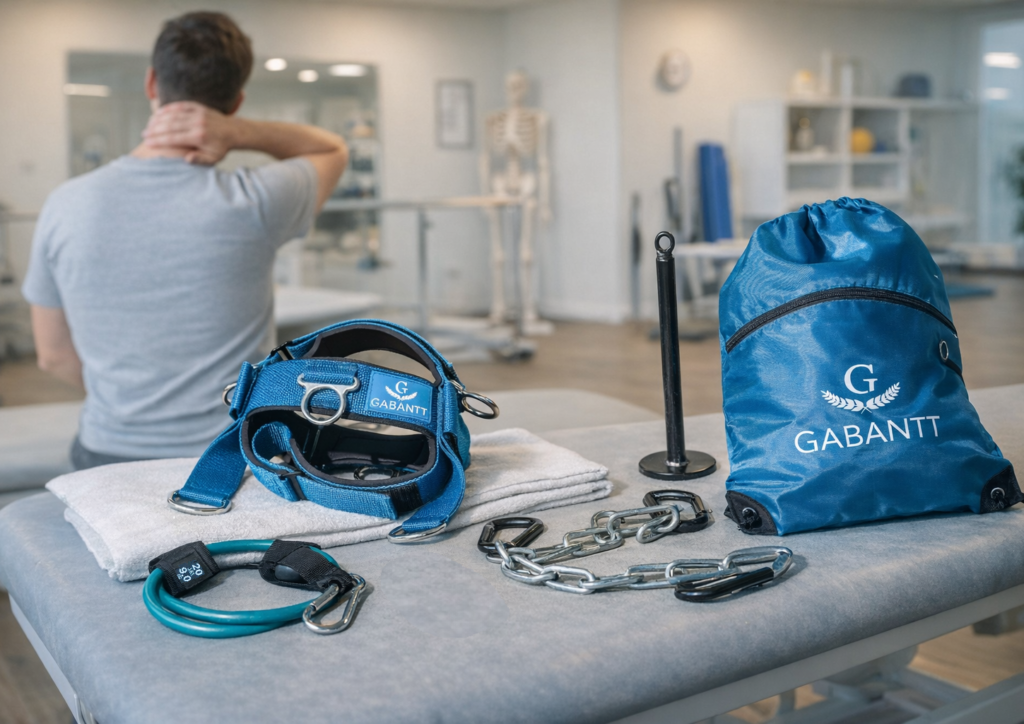
HEALTHY NECK = HEALTHY BODY
REHABILITATION
Supports muscle recovery and improves mobility after injuries.
Neck pain is often linked to muscle imbalances, weakness, and poor motor control. Targeted neck training addresses these root causes by improving strength, endurance, and neuromuscular coordination. From a physiotherapy perspective, controlled resistance exercises can:
Restore functional stability to the cervical spine
Reduce chronic tension and stiffness
Improve circulation to affected tissues
When properly programmed, neck training becomes an effective tool for corrective exercise and long-term pain management, especially for individuals recovering from strain or postural dysfunction.
In rehabilitation, progressive neck strengthening is essential for a safe return to activity. After an injury, the cervical muscles often lose strength and coordination. Structured training helps restore:
Load tolerance
Confidence in movement
Functional stability
From Gabantt, we emphasize gradual progression: starting with low resistance and controlled movements, then progressing to dynamic loading. This approach ensures a safe reintegration into sports or daily activities.
For rehabilitation or treatment of previous injuries, consult a medical professional.
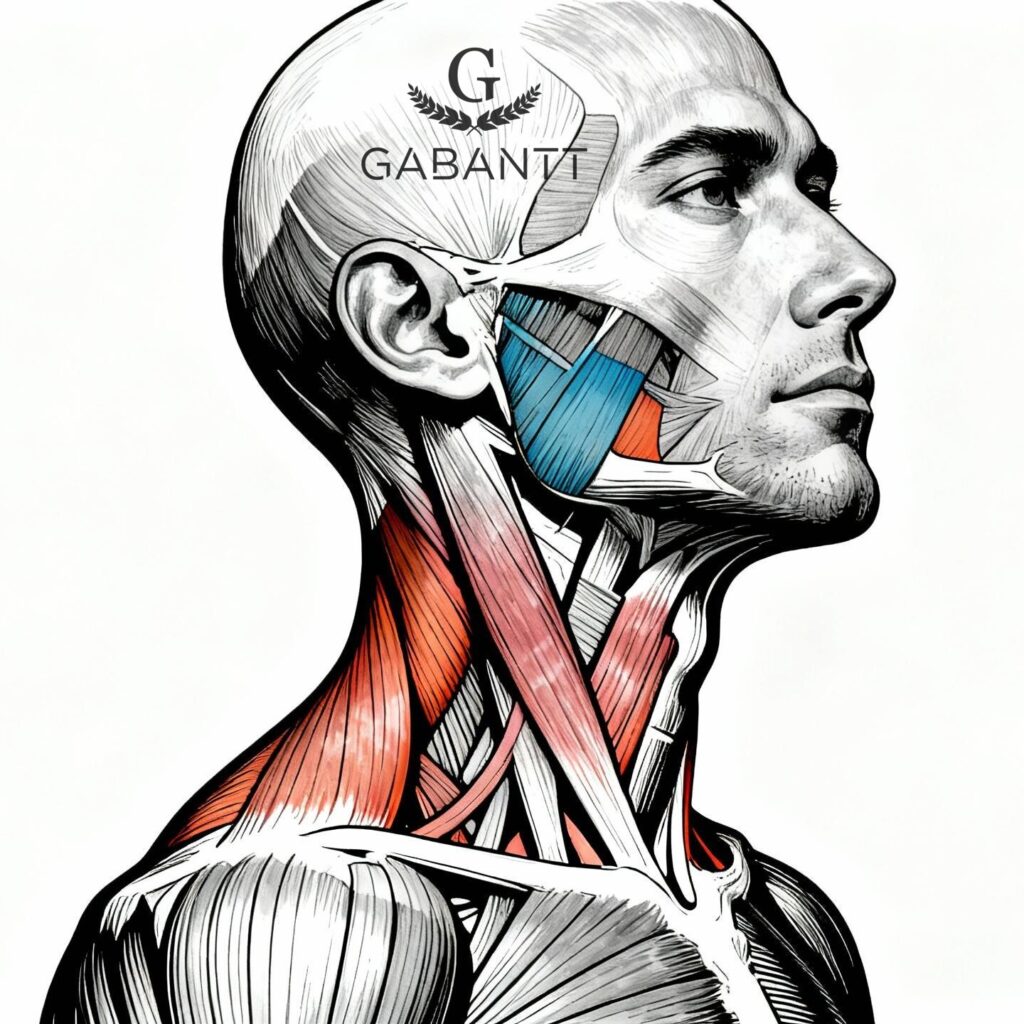
PREVENTION
Reduce the risk of cervical injuries with specific and safe training.
From both a coaching and physiological standpoint, neck strength plays a critical role in force absorption and dissipation. In combat sports and contact activities, rapid acceleration-deceleration forces act on the head and cervical spine. A well-conditioned neck increases muscular co-contraction, stabilizing the cervical vertebrae and reducing excessive motion during impact. Clinically, stronger neck musculature has been associated with a lower risk of concussion severity, as it helps minimize uncontrolled head movement. For athletes, this translates into greater durability; for general users, it means better protection during unexpected movements or minor trauma.

POSTURE
Improved Posture & Spinal Alignment.
Modern lifestyles promote forward head posture and rounded shoulders, placing continuous stress on the cervical spine. Strengthening the deep and superficial neck flexors and extensors helps re-align the head over the spine, restoring a more neutral posture. This is one of the most overlooked performance factors.
Better posture leads to:
Reduced fatigue during training.
More efficient breathing mechanics.
Decreased strain on surrounding musculature.
From a clinical angle, improved alignment reduces compressive load on intervertebral discs and minimizes long-term degeneration risk.
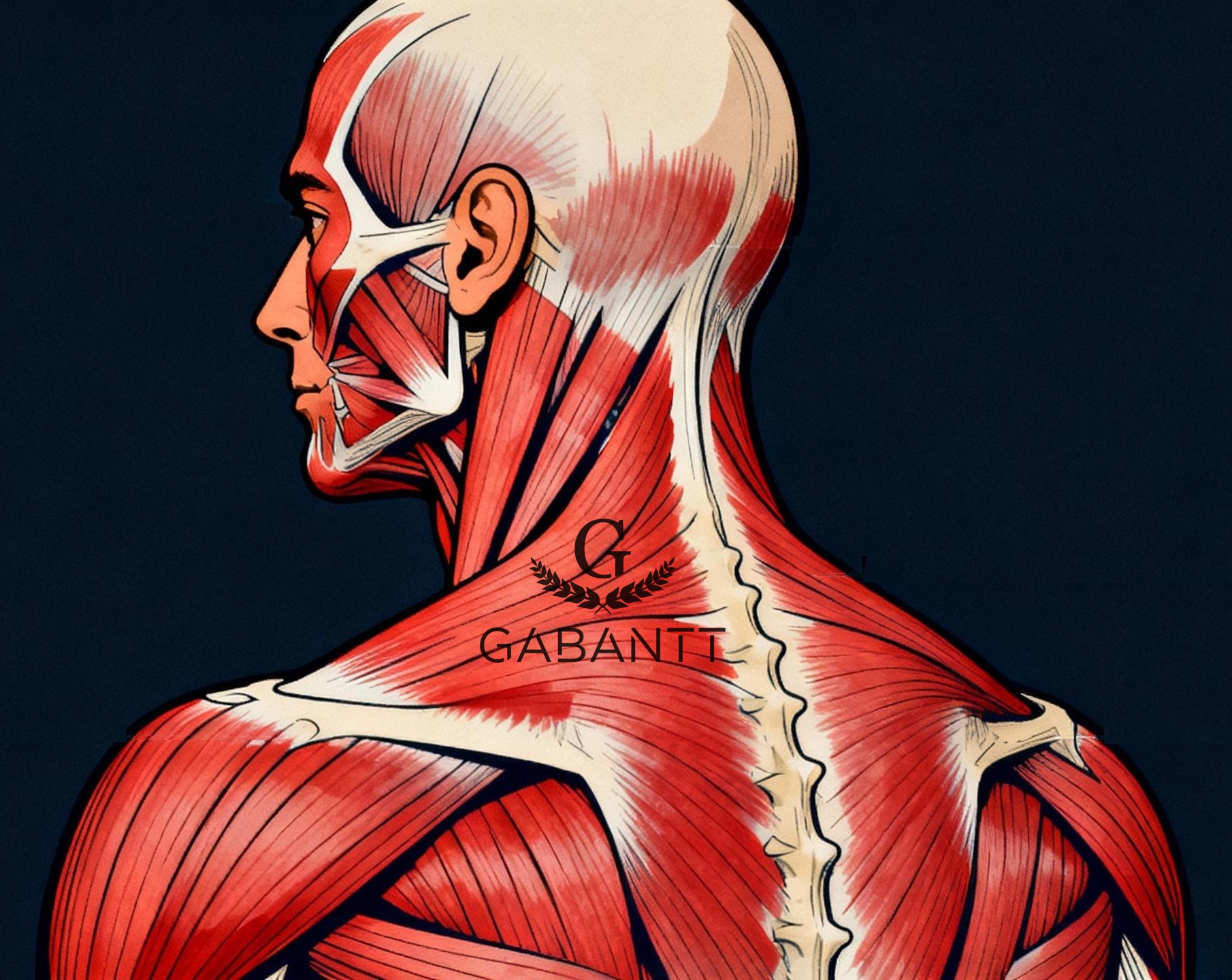
PERFORMANCE
Improved athlete.
A strong neck is not just protective—it’s performance-enhancing. In sports like boxing, wrestling, and MMA, neck strength directly contributes to:
Force transfer and kinetic chain efficiency
Greater control during grappling exchanges
Improved balance and body awareness
Athletes with stronger necks can maintain positional integrity under load, resist opponent pressure, and execute techniques with more stability. This translates into measurable improvements in both offensive and defensive capabilities.
Training improves local muscular endurance, allowing athletes to maintain stability over extended periods without fatigue.
From a physiological standpoint, this enhances:
Motor unit recruitment efficiency
Resistance to neuromuscular fatigue
Overall cervical spine stability
This is crucial not only for athletes but also for individuals who spend long hours in static positions, such as desk workers.

EVERYDAY LIFE
Beyond sports, neck strength supports everyday movements—driving, lifting, working, and even sleeping posture. A stronger neck reduces the likelihood of strain from routine activities and improves overall movement efficiency.
In practical terms, this means:
Less stiffness after long days
Better tolerance to physical stress
Greater overall physical resilience

CONFIDENCE
Beyond sports, neck strength supports everyday movements—driving, lifting, working, and even sleeping posture. A stronger neck reduces the likelihood of strain from routine activities and improves overall movement efficiency.
In practical terms, this means:
Less stiffness after long days
Better tolerance to physical stress
Greater overall physical resilience